Published and sources checked 2 November 2026. Prepared by Mayura Global Traders. This guide supports buying discussions; confirm the final specification and destination requirements for your shipment.
QUICK ANSWER
How do you compare bulk onion and garlic powders?
Compare the same product form, ingredient declaration, particle-size method, flavour performance, moisture requirements and microbiological specification. Confirm treatment status, packing and batch evidence. Onion powder, garlic powder and garlic flakes serve different formulation needs, so approve samples in the intended recipe before ordering.
Dehydrated onion and garlic ingredients help manufacturers plan repeatable seasoning blends, sauces and prepared foods. For bulk sourcing from India, a useful quotation begins with the product your process needs—not simply a price per kilogram.
Choose the right ingredient and format
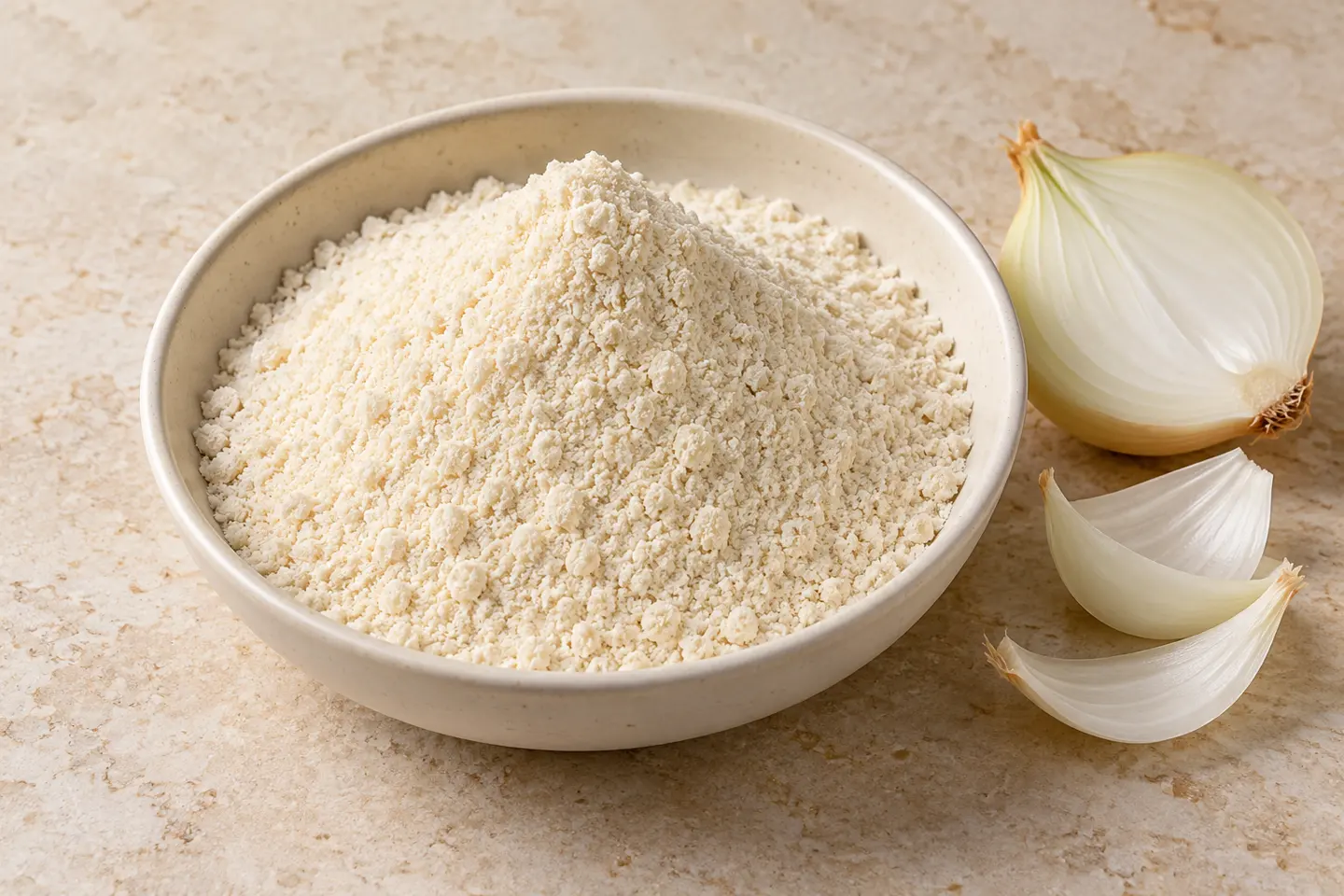
Onion powder and garlic powder are separate ingredients with distinct flavour profiles. A combined enquiry should list them as separate lines with individual quantities and specifications. Ask whether the onion material is white, red or another agreed type, and establish a reference sample for the colour and flavour you need.
| Product | Trial focus | Detail to specify |
|---|---|---|
| Onion powder | Flavour balance, colour and even distribution | Onion type, particle distribution and full composition |
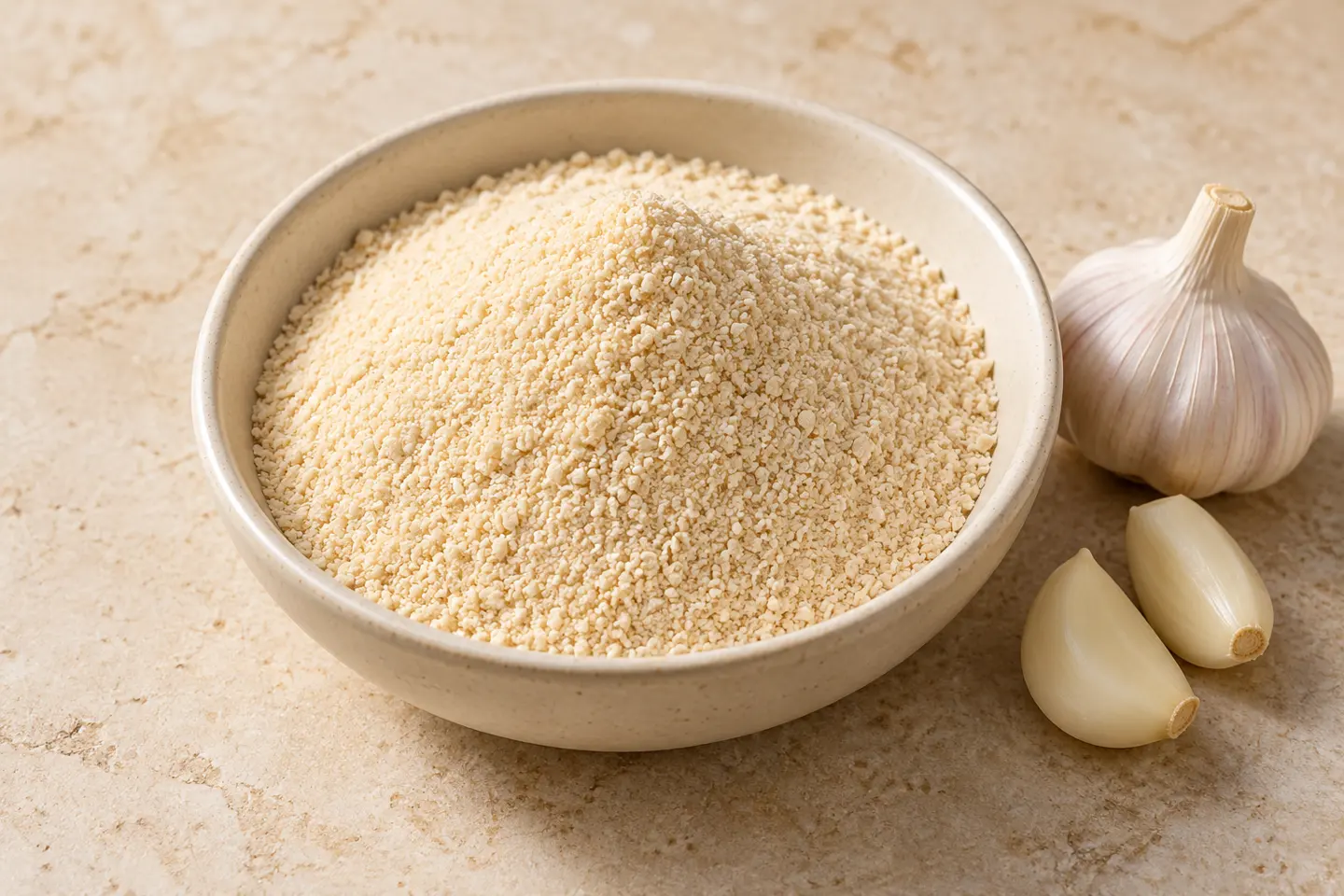
| Garlic powder | Garlic intensity and performance after mixing or cooking | Particle distribution, sensory reference and treatment status |
| Garlic flakes | Visible pieces, texture and rehydration in the recipe | Flake dimensions, size tolerance and fines |
Powder is not interchangeable with flakes on a simple volume basis. Use weighed trials under your actual preparation conditions. If granules or a different cut are required, describe them explicitly and confirm availability rather than assuming that every size is included in the catalogue.
Confirm ingredients and processing
Request a complete ingredient declaration. Establish whether the offer is onion or garlic only, or includes a carrier, salt or anti-caking agent. Ask for details of additives and processing treatments so your team can check suitability for the final product and its label.
Review how the raw material is selected, prepared, dried, milled and protected after processing. Ask about sieving, foreign-material controls and lot identification. A statement such as “export quality” is not a measurable specification; translate it into acceptance criteria that both parties can verify.
Set measurable quality requirements
Specify particle size using a defined sieve opening and percentage passing. A mesh number without the sieve standard can be ambiguous. Include any limit on coarse particles or fines that affects your dosing equipment. Test how the powder behaves in your actual mixer, not only how it feels between the fingers.
Agree moisture limits and, where relevant, water activity with the test method stated. These are different measurements. Add requirements for sensory quality, visible foreign matter and composition. Establish a labelled reference sample and document preparation conditions for repeat sensory comparisons.
The FSSAI fruit and vegetable product standards are a starting point for checking the relevant Indian product provisions. The purchase contract must also address the destination rules and the buyer’s technical needs. Avoid treating a single numerical limit from an unrelated product form as a universal powder grade.
Review food-safety controls and lot testing
Low moisture does not eliminate all microbiological hazards. The FAO/WHO assessment of low-moisture foods includes dried vegetables and explains that bacteria can survive for extended periods in dry foods. Define the required microbial criteria and the relevant process controls with your food-safety team, especially for ingredients added after cooking.
Ask whether a pathogen-reduction treatment is used, how it is controlled and how recontamination is prevented afterwards. Approve the sensory characteristics after any proposed treatment. Request a certificate of analysis tied to the offered lot, with results, units, methods and sample identification. Add pesticide, contaminant or other testing where the destination and risk assessment require it.
Protect the powder during storage and transit
Agree sealed food-contact inner packaging, suitable outer protection and the net weight per unit. Ask how the supplier protects the powder from moisture, odours and damage during handling. Check that the proposed bag or liner works with your receiving and dispensing process.
Define storage conditions, stated shelf life and the minimum remaining shelf life required on arrival. Do not assume the same duration for every formulation and pack. Review pallet configuration, carton or bag counts, gross weights and shipping marks before booking freight. Use packed dimensions in the CBM calculator, then confirm the loading plan with the carrier.
Check destination documentation and labels
Ask the importer or customs broker to confirm the tariff classification and entry requirements for the exact product. Powder, mixtures and preparations containing additional ingredients may need different treatment. Do not automatically reuse a fresh-onion or fresh-garlic classification for dried goods.
For US shipments, review FDA’s import procedures, including applicable facility registration and prior notice, and establish the importer’s FSVP responsibilities. Other destinations have their own requirements; the buyer should confirm them before dispatch.
Prepare a document checklist covering the invoice, packing list, transport document, origin documentation and agreed test reports. Add certificates only when required by the destination or purchase terms. Confirm any organic, halal or other requested certification for the actual product and operator rather than assuming it applies across a supplier’s range.
Compare quotations on the same basis
Give each supplier the same specification, quantity, packing format, destination and delivery window. Request a named Incoterm and place or port, and identify what the quoted price includes. Include sampling, inspection and testing requirements early so they can be priced and scheduled.
Record the approved sample, agreed tolerances, substitution rules and process for resolving a non-conforming delivery in the order terms. A cheaper powder that requires a higher dose or performs poorly on the production line may not offer the lower formulation cost.
Start with our Dehydrated onion powder, garlic powder and garlic flakes product pages. Add the required products to one quotation request and supply a separate quantity for each.
Common onion and garlic powder questions
Is a finer powder always better?
No. Choose particle size for your mixing, dosing and sensory requirements. Approve a sample in the actual application.
Is garlic powder the same as garlic salt?
No. Garlic salt is a blend containing salt. Check the full ingredient declaration so the purchased product matches the formulation.
Does dehydrated mean sterile?
No. Request appropriate process-control evidence and batch testing for the intended use; drying alone is not proof of sterility.
Prepared by Mayura Global Traders. Sources reviewed 2 November 2026. Editorial, sources and corrections policy.
PLAN YOUR NEXT SHIPMENT
Request a specification-based quotation.
Send the product, quantity, packing requirements and destination to Mayura Global Traders in Bengaluru, Karnataka, India. We aim to respond within one business day.
Build your quotationContact our sourcing team