Published and sources checked 11 October 2026. Prepared by Mayura Global Traders. This guide supports buying discussions; confirm the final specification and destination requirements for your shipment.
QUICK ANSWER
The buying essentials
A cocopeat buying specification should define block weight and tolerance, EC and pH test methods, processing, expanded volume, particle structure and packing. Low EC does not prove buffering, and nominal block weight does not guarantee a fixed expansion volume. Agree sample trials and acceptance limits for the intended crop or growing system.
- Compare EC results only with an agreed method, reporting units and acceptance limit; the appropriate target depends on the growing system.
- Washing reduces soluble salts, while buffering is a separate treatment that requires its own process declaration and verification.
- Use compressed, packed dimensions for shipping CBM; hydrated expansion volume measures product performance and requires an agreed trial procedure.
When sourcing cocopeat blocks from India, compare the tested growing medium, not just the advertised block weight. A meaningful buying specification connects electrical conductivity, processing, expanded volume and particle structure to your crop or resale application.
What a 5 kg cocopeat block specification should tell you
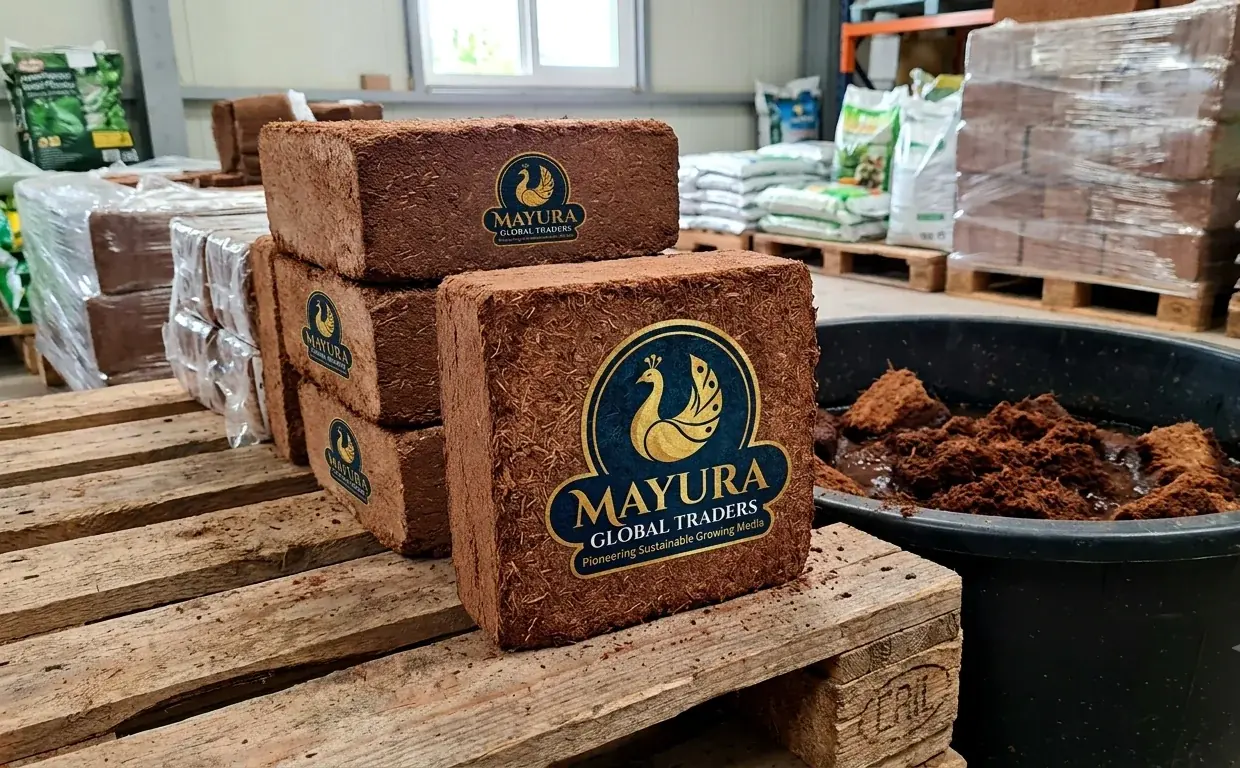
A “5 kg block” identifies a nominal commercial format. It does not, by itself, establish moisture content, expansion volume, salt level or crop suitability. Confirm the allowed weight tolerance and whether the quoted weight is measured as packed. Ask for a lot-specific test report where the agreed parameters require one.
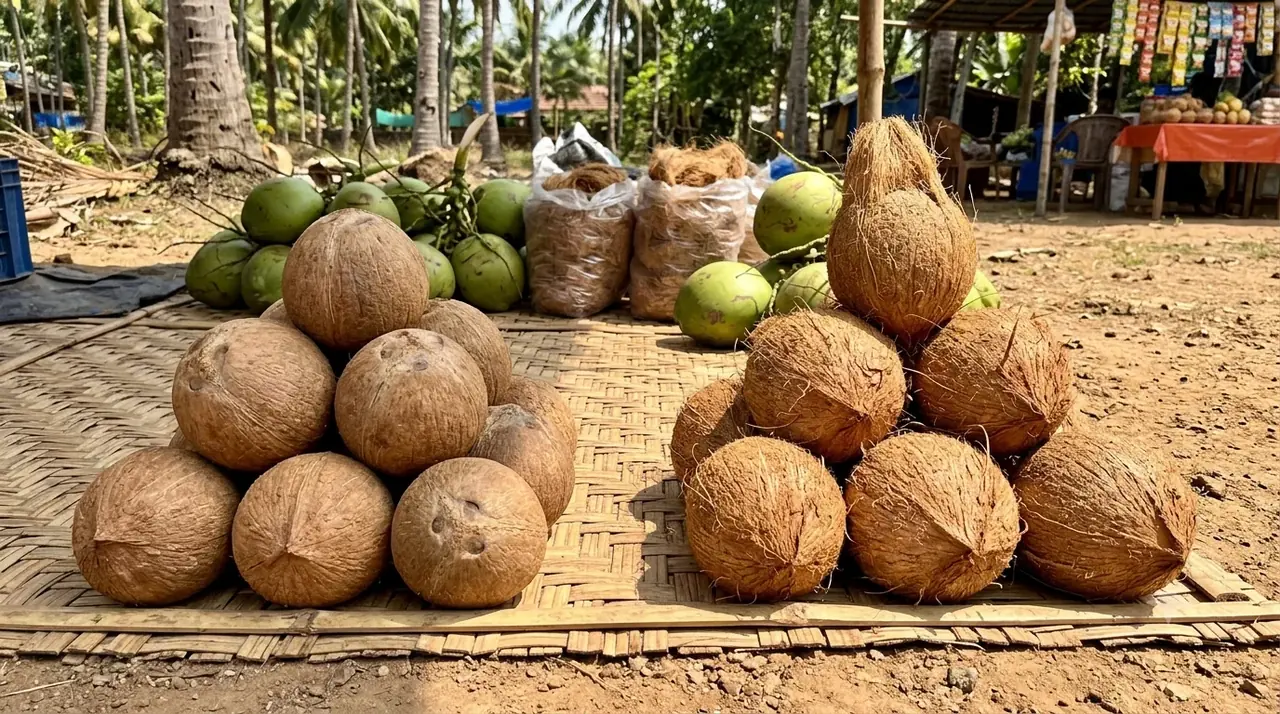
Coir pith comes from the coconut husk. The Coir Board describes its use as a horticultural growing medium and soil conditioner. Product form and processing still matter: a compressed block sold for further blending needs a different buying brief from a material expected to enter a grower's system directly.
| Parameter | What to put in the purchase specification | Evidence to request |
|---|---|---|
| Block format | Nominal weight, tolerance, dimensions and packing moisture basis | Weighing and dimensional checks on the proposed lot |
| EC and pH | Target ranges, units and the test method | A dated report identifying the sample and method |
| Processing | Unwashed, washed or buffered; any additional treatment | Process declaration and agreed verification |
| Expansion | Minimum accepted hydrated volume and measurement procedure | Representative hydration trial |
| Structure | Particle grade, fibre/chip content and unwanted-material limits | Sample evaluation and sieve information if specified |
| Commercial pack | Wrapping, labels, pallet pattern, net and gross weights | Packing list and loading proposal |
Low EC is incomplete without a test method
Electrical conductivity is used to assess dissolved salts. Purdue Extension explains that accepted substrate-extraction methods have different interpretation ranges. Sample moisture and the water used during extraction can also affect results. Two reports headed “low EC” are therefore not automatically comparable.
Write down the method name, any substrate-to-water ratio, reporting unit and acceptance limit. Have your grower or agronomist choose the limit for the intended crop, growing system and irrigation water. The aim is a repeatable comparison between the approved sample and the supplied lot, rather than the lowest-looking number on a brochure.
Keep pH as a separate specification. An acceptable EC result does not demonstrate an acceptable pH, nutrient balance, freedom from contaminants or suitability for every plant. If a report omits its method or sample identity, ask for those details before approving the purchase.
Washed and buffered cocopeat are different descriptions
Washing is used to reduce soluble salts. Buffering is a separate treatment; an RHS interview with a growing-media producer distinguishes plain-water washing from calcium treatment for buffered coir. Research archived by Uva Wellassa University discusses the role of ion exchange in buffering.
For purchasing, the practical distinction is straightforward: request the process that your application needs and evidence appropriate to that process. A low EC result alone does not prove that a material was buffered. Equally, “buffered” should not be treated as a promise that every crop can use the product without a suitable nutrient programme.
Ask whether any additives are included and whether the sample was tested before or after final processing. If you require a particular certification, verify its scope and validity for the material being offered. A natural raw material is not automatically certified organic.
Agree expansion separately from block weight
Specify how the expanded medium will be measured: sample selection, water quantity and quality, hydration time, loosening procedure, drainage conditions and the volume container used. A supplier and buyer who use different procedures can obtain different results from the same block.
Use an agreed trial to establish the acceptance value. Do not assume that every nominal 5 kg block produces a fixed number of litres. Ask the supplier to state its proposed expansion specification and method, then compare that claim with your own representative sample test.
For purchasing comparisons, calculate cost per accepted litre only after establishing the relevant hydrated-volume basis. Keep the calculation separate from freight: shipments move as compressed packages, so the shipping CBM is based on packed dimensions, not the expanded growing-medium volume.
Match the physical structure to the application
Describe whether the medium is intended for propagation, container crops, a blended potting mix or another use. Ask your technical team what particle distribution and air/water behaviour the system requires. A visually similar brown block can still be unsuitable for your operating method.
Request the proposed blend or particle grade, visible fibre and chip content, and limits for sand or other unwanted material. For an initial order, retain a labelled sample and document the trial conditions. If the next delivery performs differently, those records help separate a material variation from changes in irrigation or blending.
Packing, traceability and destination checks
Confirm block count, wrapping, pallet dimensions, pallet gross weight, marks and lot codes. Check that the packing list reconciles the total blocks, net product weight and gross shipment weight. Discuss how the packages will be kept dry and protected during storage and transit.
Use our CBM calculator with packed dimensions, then have the carrier validate payload and loading. The importer should confirm entry conditions for the exact growing-medium form, including any required declarations, treatment or plant-health documentation. Resolve these questions before dispatch, especially when the material will be sold into a regulated growing system.
Send a cocopeat enquiry that can be quoted accurately
Start with the intended use, nominal block size, trial or recurring quantity, EC method and target, pH range, processing preference, expansion requirement and packing format. Add the destination, shipment window and requested price basis. If a parameter is still undecided, say so and ask for the supplier's available specification rather than filling in an arbitrary limit.
Explore our cocopeat category or the cocopeat blocks detail page, then add the product to your quotation request. Commercial availability, agreed tests and the final specification are confirmed during enquiry.
Common cocopeat buying questions
Is low-EC cocopeat always buffered?
No. EC and processing status answer different questions. Ask for both the test result and a clear process declaration.
Can expansion litres be used for shipping CBM?
No. Measure the compressed, packed shipment for freight planning. Hydrated volume is a separate product-performance measure.
What is the best EC limit?
There is no single limit for every crop and method. Agree the method and target with the technical team responsible for the intended growing system.
Published by Mayura Global Traders. Updated . Sources, AI assistance and corrections.
PLAN YOUR NEXT SHIPMENT
Request a specification-based quotation.
Send the product, quantity, packing requirements and destination to Mayura Global Traders in Bengaluru, Karnataka, India. We aim to respond within one business day.
Build your quotationContact our sourcing team