For an onion buyer, “export quality” is not a sufficient specification. Commercial value depends on variety, bulb size, curing, skin condition, defects, packing and whether the shipment is eligible for the destination. Agree those details before comparing the price per tonne.
Sourcing Indian onions
APEDA identifies Maharashtra, Madhya Pradesh, Karnataka and Gujarat among India's important onion-producing states. Its fresh-onion overview lists red, white and other varieties, including Agrifound Dark Red, Agrifound Light Red, NHRDF Red and Agrifound White. A state or mandi name is useful context, but it does not replace the identity and condition of the actual lot.
Ask the supplier for the growing region, harvest period, curing stage and storage history. Find out whether the order will be packed from one lot or assembled from several. A low price for mixed bulbs may become expensive after sorting losses and arrival claims. For repeat programmes, approve a sourcing specification and keep the same inspection method across suppliers.
Variety, colour and intended use
| Buying category | Examples / description | Specification to request |
|---|---|---|
| Red onions | Named red cultivars or an agreed commercial red-onion selection | Skin colour, shape, pungency expectation, bulb diameter and curing |
| White onions | White-skinned bulbs for the buyer's fresh or processing application | Colour uniformity, defects and processing suitability where relevant |
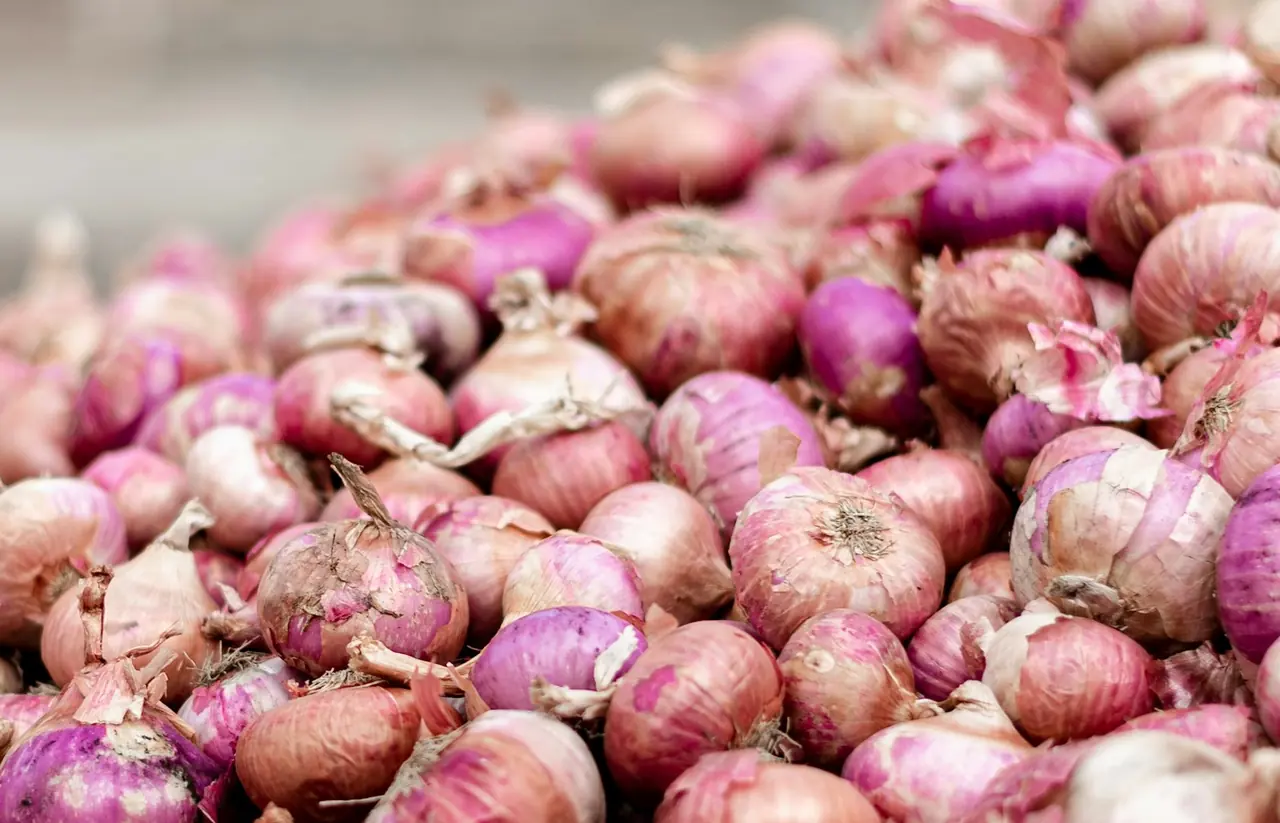
| Small onions / shallot-type supply | A different buying proposition from large round onions | Exact identity, count or diameter, peeling condition and intended use |
| Yellow onions | A specifically contracted cultivar or commercial selection | Availability, colour, shape and destination acceptance; do not assume substitution for red onions |
Retailers may prioritise uniform appearance and count, while foodservice buyers may care more about usable yield and consistent preparation. A processing buyer should describe its end use. These are commercial choices, not a universal ranking in which one colour is automatically better than another.
Write a measurable size and grade specification
State how diameter is measured and how an inspection sample is selected. An illustrative request could ask for 45–60 mm equatorial diameter, with separately agreed tolerances for undersize and oversize bulbs. This is an example contract band, not a legal or universal “export grade”. Other buyers may require smaller or larger sizes. Avoid terms such as “A grade” without defining what they mean.
- Condition: sound bulbs, agreed dryness of neck and outer skins, and freedom from visible rot, mould and active infestation.
- Defect limits: set separate tolerances for sprouting, doubles, splits, mechanical injury, missing skins and foreign material.
- Uniformity: define the variety or selection, size band and acceptable colour variation.
- Weight: distinguish net onion weight from packaging and specify the weighing point.
- Evidence: request a lot-coded inspection record and current photographs with a ruler or sizing reference.
Curing, packing and transport
Choose packaging and a transport programme with a produce specialist for the lot and route. Ventilated bags or other agreed formats should protect the bulbs while permitting the required airflow. State bag strength, net weight, pallet arrangement and marks. Keep lot codes readable after handling and do not load visibly wet or deteriorating stock.
There is no single safe container setting for every onion shipment. Product condition, transit time, ambient conditions, ventilation and equipment all matter. Ask the forwarder and supplier to document their proposed programme and how it will be monitored. A refrigerated container is not a way to repair poor curing; a standard dry container is not automatically suitable for every route.
Country-specific requirements: what to verify
The following is a verification map, not a statement that every listed destination currently admits every Indian onion product. Get written confirmation for the precise commodity, origin and shipment date before committing cargo.
| Destination | Official requirements / checks |
|---|---|
| United Arab Emirates | MOCCAE's agricultural-consignment release service lists a phytosanitary certificate and transport/customs documentation. Confirm origin information, inspection, importer arrangements and any additional lot-specific requirements. |
| Saudi Arabia | Check importer arrangements and the SFDA food-clearance conditions, including plant-health documentation for fresh produce. Agree labels and any required certificates with the importer; do not assume UAE paperwork is sufficient. |
| Germany / European Union | Verify the relevant EU plant-health entry rules and pesticide MRLs. Germany is an EU destination; the commodity's plant-health controls and food requirements must both be checked. |
| China | Ask the importer to establish commodity/origin eligibility with GACC before contracting. Its plant and animal quarantine guide describes official certificates, origin and shipment documents, and permits for products requiring approval. This guide does not confirm Indian-onion market access. |
| Thailand | Confirm the commodity's classification and conditions under the Plant Quarantine Act and current implementing notifications. Resolve permit, certificate and inspection requirements through the importer and DOA. |
| Japan | Check the exact origin/product combination with MAFF Plant Protection Stations. Plant-health certificates and inspection do not override an applicable prohibition; establish admissibility first. |
Do not confuse certifications
Plant-health documents, food-safety testing and buyer assurance schemes serve different purposes. A retailer may request farm assurance or a particular packhouse audit, but this does not make that scheme a universal government condition. Organic claims require the appropriate verified certification and transaction documentation. Ask the buyer to distinguish legal requirements from its own procurement policy.
Onion export restrictions, minimum prices and duties have changed over time. Check the current DGFT notifications and applicable customs measures at quotation and again before dispatch. This article intentionally does not promise a fixed duty rate or unrestricted export status.
What to include in your onion enquiry
Provide colour or cultivar, diameter band, quantity, net bag weight, destination, arrival window and acceptance criteria. Tell us whether the onions are for retail, foodservice or processing. Include the importer's required certificates and residue limits. A useful quotation should identify the proposed lot specification, packing, shipment basis, inspection scope and conditions under which substitutions require your approval.
MAKE THE NEXT STEP SPECIFIC
Tell us what you need to source.
Share your product, quantity, destination and specification with our team in Bengaluru, Karnataka, INDIA.
Send a sourcing enquiryExplore the product catalogue